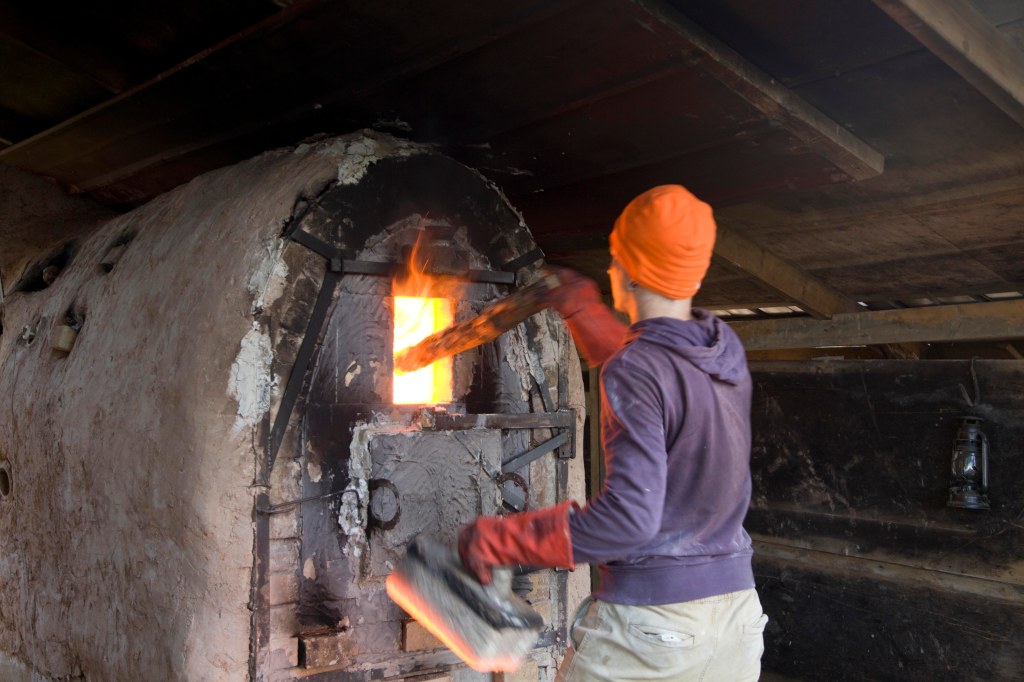
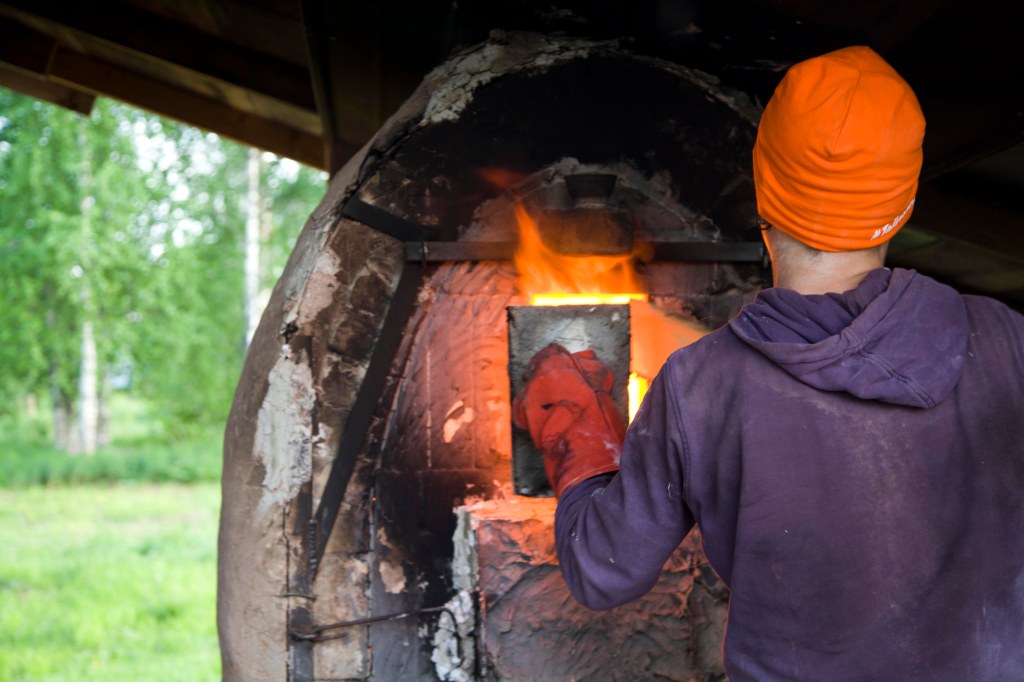
At the beginning of summer 2024, I conducted my first firing in a grass-fired kiln.
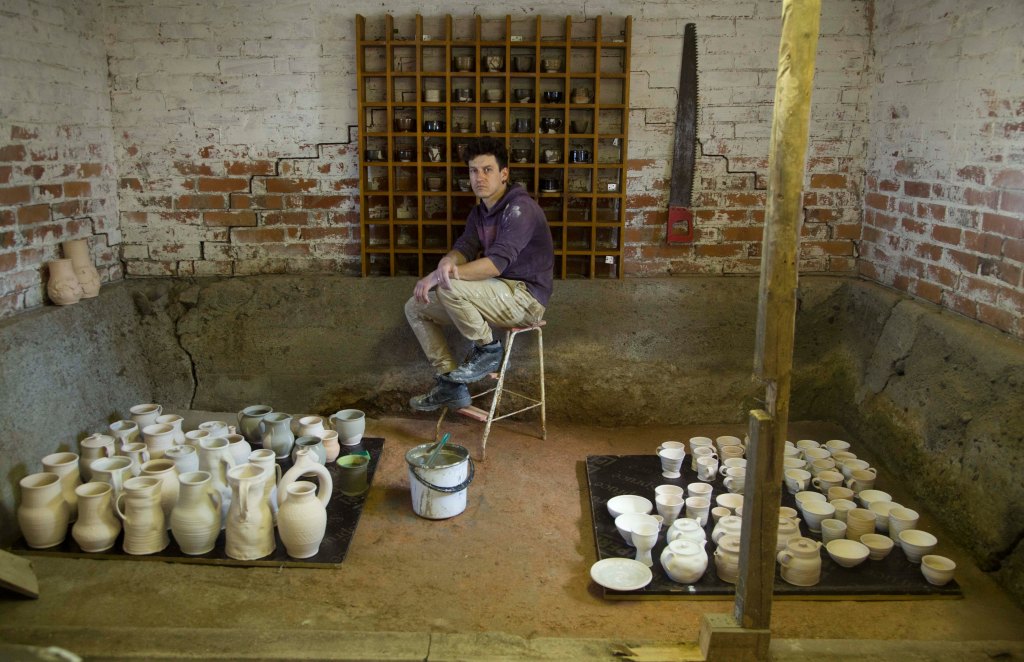
Using a potter’s wheel, I created ceramics and then developed glazes based on clays and ash. Over 13 hours of firing, we reached a temperature of 1300°C. The kiln performed exceptionally well, and I am very pleased with the results. The firing process went smoothly, with the temperature rising steadily without any significant issues. Of course, dry firewood, especially birch, played an important role—it is an excellent fuel.
A duration of 13 hours to reach 1300°C is considered a relatively fast firing. On average, this is about 100°C per hour, which is a good heating rate. Inside the kiln, there were small pieces—cups and pots—so I was not overly concerned about their integrity and could afford to raise the temperature quite quickly.
However, when firing large sculptures or sizable objects, special caution is required. The flames can heat certain parts of a sculpture unevenly, and due to thermal expansion, cracks may appear, or the piece may even break. Therefore, it is crucial to choose the optimal firing regime depending on the size and shape of the objects.
As a rule, at the beginning of the firing process, up to 700°C, the temperature should rise gradually without sudden spikes. This allows the pieces to heat evenly, reducing the risk of cracking. After 800°C, there is no longer a need to worry about rapid heating, as the main thermal expansion processes have already occurred. At this stage, firewood can be added more actively without fear of damage.


 Metsässä
Leave a comment